
[Also watch this on YouTube!]
Hey fellow investors, in my previous post — the one right after the market started bouncing back from the tariff bombshell — I said I wasn’t chasing the rally. That post came just days after Trump’s tariff announcement on April 4, which triggered a sharp sell-off in global markets. The S&P 500 dropped over 10%, and the Nasdaq nearly 20%. Some calm has returned to the market since then, especially after the U.S. administration walked back some of its tougher tariff positions. In fact, just this week, the S&P 500 and the Nasdaq have recovered all their losses from the initial shock!
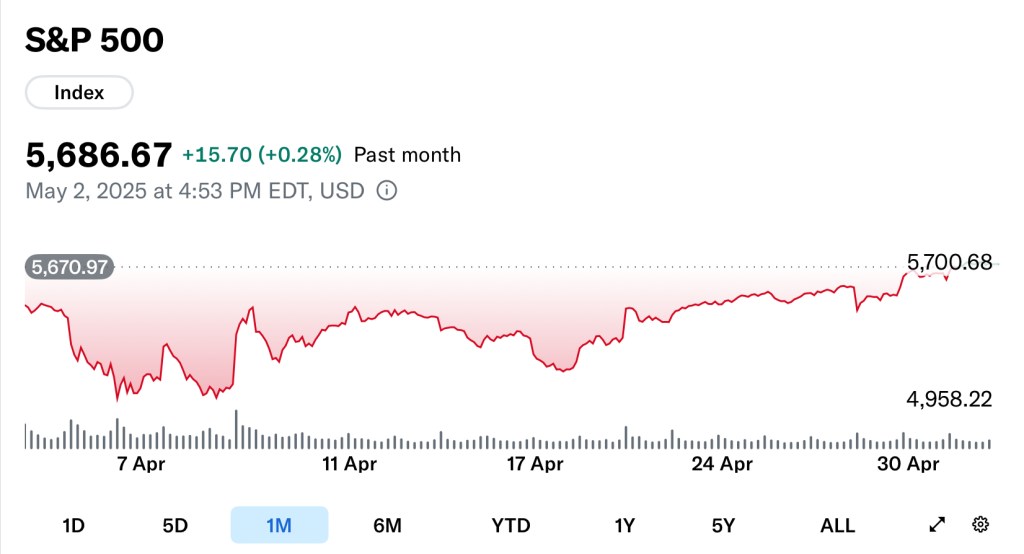
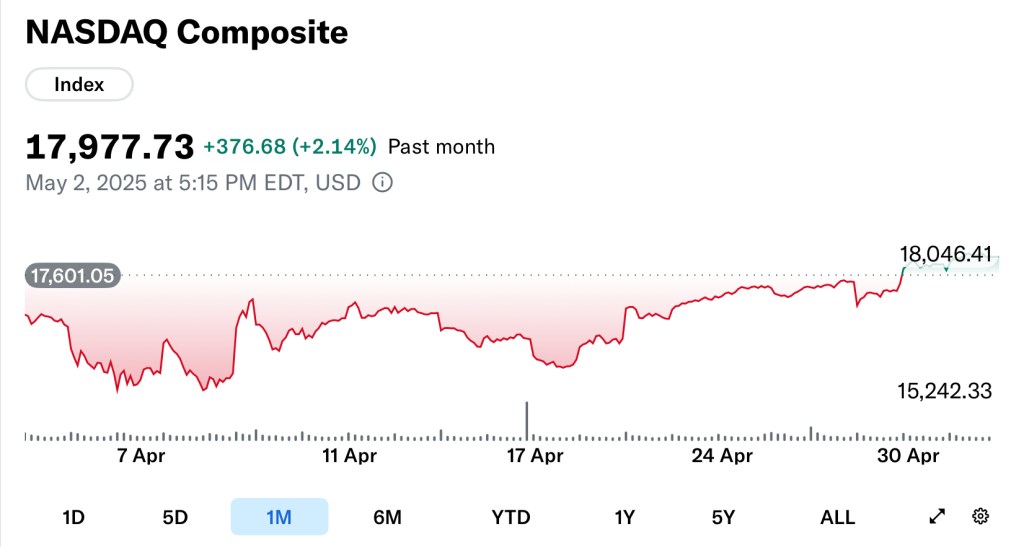
Now, that’s a huge recovery in a short time. And to be honest — I didn’t expect the rebound to be this strong, this fast. But credit where it’s due — the way the bond market reacted, and how the administration toned things down in response, gave me more confidence than I expected. It’s not a full U-turn in my view, but I’m definitely less cautious now.
Still, I know many of you are wondering — is this a red flag? A potential trap in the making — where the market lures investors back in with a feel-good rally, only to pull the rug when the real economic damage starts showing up? Or is everything really back to normal… or even better, the start of another strong leg up for the markets?
So in today’s post, let’s break down what the latest numbers actually say, what’s really driving the rebound, and whether the recent optimism is justified. Most importantly, I’ll share The Dividend Uncle’s take — am I still on the sidelines, or am I getting ready to lean back in? Even if you don’t invest in the US, remember that the performance of the US markets often sets the tone for the rest of the world, including Singapore.
As usual, let me remind you that this post is for informational purposes only and not financial advice. Always do your own research and consult a licensed financial adviser before making any investment decisions. I own some of the shares discussed, but what works for me might not work for you.
Alright, let’s get started!
The Worry: US Economy Shrinks in Q1 – And Why It Matters
But before we get carried away by the market recovery, let’s first look at the hard numbers. Because for all the optimism in stock prices, the economic data is telling a more complicated story. And it starts with something we haven’t seen in a while — the US economy actually shrinking.
The latest GDP numbers for Q1 2025 showed a 0.3% contraction — the first quarterly decline in three years. That’s not something to brush off, especially when markets are celebrating like it’s business as usual.
You might be wondering — if the new tariffs were only officially announced on April 2, how could they already affect Q1 figures, which only cover up to March 31?
The answer lies in anticipation. By mid-March, there were already growing rumours and unofficial leaks pointing to incoming tariffs. Businesses didn’t wait for the formal announcement — they rushed to front-load their imports ahead of time, trying to avoid higher costs later. This created a spike in imports and a record trade deficit, which alone shaved 4.8 percentage points off GDP.
In short, it wasn’t the tariffs themselves that hit Q1 growth — it was the scramble to prepare for them. And that’s just the first wave. The real impact — on consumer prices, corporate margins, and global trade dynamics — may still be ahead.
Inflation Surges Even Ahead of Tariff Impact
Several major companies are already warning of price increases. Procter & Gamble, maker of Pampers and Gillette, has flagged upcoming hikes across consumer staples. General Motors expects up to $5 billion in added costs from tariffs. Even McDonald’s reported a drop in U.S. sales, linking it to economic anxiety and trade tensions. These corporate warnings add colour to the inflation data — it’s clear that pricing pressures are here to stay, and companies aren’t hesitating to pass them on.
At the same time, consumers are feeling the pinch. The Conference Board’s consumer confidence index plunged to the lowest level since the Covid period, a 5-year low. Their Expectations Index — which reflects how people feel about jobs, income, and spending ahead — dropped to its weakest reading since 2011, a 13-year low.
Personally, I think this is kind of expected – Goldman Sachs CEO David Solomon warned that the uncertainties will result in people tightening their belts, businesses investing less, resulting in growth slowing down.
So we now have rising prices, corporate warnings about future hikes, and consumers getting increasingly nervous. That combination makes it hard for the market rally to hold, and harder still for policy makers to respond without making things worse.
Why the Rally Might Be Real This Time
Now, all that sounds like a lot of doom and gloom. But here’s where the picture gets more interesting.
Despite the weak economic data, the stock market has bounced back — and not just partially, but fully. It’s recovered all the losses triggered by the tariff shock in early April. So the big question is: is the market ignoring the risks, or is it seeing something we’re missing?
Personally, I think it’s not blind optimism. There are some genuine reasons behind this rally — and they’re worth paying attention to.
First, US corporate earnings have shown strength. Microsoft blew past expectations with its cloud and AI businesses, and the stock jumped 8% in a day. Meta followed suit, reporting a 35% surge in net income and strong ad revenue, pushing its shares up 4%. Even Nvidia — yes, the same Nvidia that took a US$5.5 billion hit from China-related restrictions — saw its share price bounce, driven by faith in long-term AI demand.
Second, trade tensions are easing — at least for now. While the original tariff announcement on April 2 sent markets into panic mode, the US administration has since softened its tone. Several exemptions have been announced, and a 90-day pause on some reciprocal measures has given markets breathing space. It’s not a U-turn, but it’s not a full-speed trade war either. In fact, just one successful trade deal announcement — say with India or South Korea — could go a long way in restoring market confidence.
But I’ve said before: even if the market recovers and trade deals are eventually signed, one big uncertainty has always hung over everything — the risk of sudden policy shocks. That kind of unpredictability makes it nearly impossible to plan ahead or do any meaningful investment analysis.
That’s why the next part might surprise you — because what actually gave me a bit more comfort… wasn’t earnings or tariffs, but something far less exciting: the bond market.
But before we dive into the factor that’s made this Uncle a little more at ease with the market, if you’ve found these timely updates and personal takes on investing useful, do give this post a Like — and consider subscribing so you won’t miss future updates. Alright, let’s get back to what I think is the most critical development so far.
The Bond Market: Keeping Extreme Policies in Check?
Now here’s something you don’t often hear — thank goodness for the bond market.
Back when the tariff bombshell first landed, it wasn’t just the stock market that plunged. The real chaos happened in US Treasuries. Bond yields spiked wildly as investors panicked, fearing that inflation would surge and growth would collapse. The 10-year yield shot past 4.6%, and traders started frantically repricing interest rate expectations. It was a wake-up call — not just for investors, but for policymakers too.
Here’s what I believe: the volatility in the bond market was the real game-changer.
See, the stock market can recover quickly, but when the bond market — especially US Treasuries — starts misbehaving, it signals something deeper is wrong. And that’s something the US administration couldn’t ignore. According to several analysts, the bond market stress was likely a key reason why we saw the US tone down its tariff rhetoric. A full-blown bond market upheaval isn’t just a risk to investor sentiment — it risks tightening financial conditions, slowing housing markets, and impacting business financing. In other words, it’s political risk.
That’s why, as investors, I take some comfort in this: if the bond market can put a lid on the uncertainty, maybe we won’t spiral into the kind of policy-induced chaos that some of us feared.
Sure, the risks haven’t gone away entirely. We could still get blindsided by a surprise tweet or policy twist. But what’s changed is this: there’s now a visible check-and-balance mechanism. If uncertainty flares up too sharply, the bond market response could force a recalibration — and that’s good news for those of us trying to plan our investments with a bit of logic.
So maybe, just maybe, the market isn’t being blindly optimistic this time. It’s reacting to a new anchor of stability — and that could make all the difference.
The Dividend Uncle’s Take – Bonds and Balance
So… am I still the grumpy uncle refusing to join the buffet?
I’m not rushing back in with my chopsticks just yet… but I’ve definitely moved closer to the buffet table. The market spread is starting to look a bit more appetising — strong corporate earnings, a bond market that’s keeping extreme policies in check, and a general sense that panic is off the menu for now.
So where does that leave me?
I’ve said before that uncertainty from a single policy source — like trade tariffs — makes investing incredibly difficult. When policies can shift overnight, there’s just no way to build a reliable investment thesis. But what we’ve seen over the past couple of weeks has changed the dynamics a little. And I think it’s a change worth noting.
Yes, we’re still seeing soft economic data — Q1 GDP was negative, and inflation remains elevated. But at the same time, corporate earnings are proving surprisingly resilient, and more importantly, the bond market is quietly doing its job as a stabiliser. It means that the bond market can serve as a form of pressure valve — one that keeps extreme policy moves in check. It means that the bond market can act like a safety switch — one that kicks in when things start overheating. It won’t eliminate risk, but it helps cool the extremes and lower the chances of a worst-case spiral. And for long-term investors like me, that’s something worth taking comfort in.
So while I’m still watching the data closely — especially around inflation and consumer spending — I’ve moved from high skepticism to being more optimistic. I’ll be watching the next round of corporate results and economic statistics to see if consumer spending is holding up.
If signs stay positive, I’ll be more comfortable deploying some of my dry powder. If not, I’m prepared to stay defensive. But for now, I do think the outlook is less murky than it was just two weeks ago.
Let me know what you think. Is this the turning point you’ve been waiting for, or are you still sitting on the sidelines? I’d love to hear your thoughts in the comments.
And if you found this post helpful, do this Uncle a small favour — tap the Like button and consider subscribing if you haven’t already. We’re building a community of investors who look beyond the headlines, stay calm, and think long term.
Until next time, stay steady, stay informed, and happy investing.
 The Dividend Uncle
Leave a comment