

Hey savvy investors, today we’re diving into a key issue looming over Frasers Centrepoint Trust (FCT or J69U): the upcoming Rapid Transit System or RTS Link connecting Singapore to Johor Bahru. With Causeway Point being FCT’s crown jewel, investors are wondering: Will this cross-border connection take a chunk out of Causeway Point’s footfall and tenant sales?
The RTS Link, set to be completed by 2026, is a 4km cross-border rail system that will link Woodlands North MRT station in Singapore to Bukit Chagar in Johor Bahru. With travel times expected to be around 15 minutes, the RTS aims to make cross-border commutes faster and easier, offering a compelling alternative to the heavily congested Causeway.
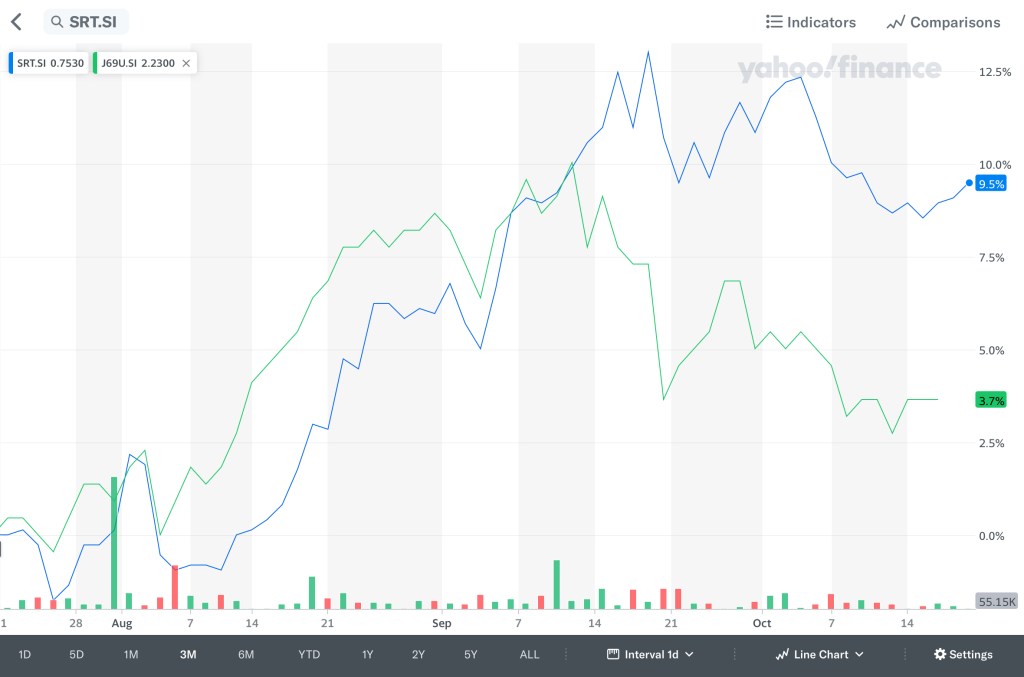
Over the past three months, the CSOP iEdge S-REIT Leaders ETF has climbed 9.5%, but FCT’s share price has lagged, rising just 3.7%. This suggests investors are growing cautious about FCT, perhaps concerned about how the RTS might affect its crown jewel, Causeway Point.
Before we dive in, I must let you know that this content is for informational and educational purposes only and does not constitute financial advice. The opinions expressed are based on publicly available information and personal analysis, and they are not tailored to your specific financial situation. The REITs and institutions mentioned are cited purely as examples. While I have no affiliations, sponsorships, or financial relationships with any of them, I may personally hold positions in some of the investments discussed. Before making any investment decisions, you are strongly encouraged to consult a licensed financial adviser.
Now, I’d like to apologise in advance for the long post today, but I wanted it to be comprehensive because this is such an important issue for FCT.
A Tempting Trip Across the Border
Just last week, I went to Johor with my family for a two-night getaway, and wow, the prices were a real eye-opener. Meals that would cost three times more in Singapore came at a fraction of the price. Din Tai Fung, Madam Kwan, llao llao. Shopping, dining, everything felt like a steal. For this value-conscious Uncle, this feels like paradise.
If I lived near Woodlands, I’d probably visit Johor even more often. And it made me wonder: How many others will feel the same once the RTS opens? With just a quick 15-minute train ride, people could head over anytime for dining, groceries, or even a short break.
This got me thinking about the potential impact on Causeway Point. Will more residents staying in Woodlands, or even those staying further away, shift their spending across the border? We’ve already seen grim tales in the news of how malls in northern Hong Kong suffering as shoppers travel across to the nearby Shenzhen to take advantage of cheaper prices. So, what does that mean for FCT’s performance going forward?
Risks of the RTS Link on FCT
Let’s explore the specific risk factors how the RTS link can potentially affect FCT.
1. Spending Leakage to Johor Malls
The elephant in the room is obvious: Why pay higher prices in Singapore when you can hop on the RTS and, in just 15 minutes, shop in Johor? Malls like Mid Valley Southkey or KSL City Mall offer food, groceries, and entertainment at perhaps 30–50% of what they cost here in Singapore.
For Causeway Point especially, which relies on residents around Woodlands, this spells trouble. As more Singaporeans make the trip across the border, discretionary spending within Causeway Point could decline. Lower tenant sales mean tougher rent negotiations, weaker rental reversions, or even store closures—none of which are good news for unitholders like us.
2. Shift in Shopper Behavior
Causeway Point has always thrived because it’s the most convenient mall for many residents near the Woodlands checkpoint. But once the RTS is operational, that convenience factor may fade. A quick ride to Johor might become the new normal for many day-trippers seeking more variety and cheaper deals.
FCT may need to ramp up marketing promotions to retain shoppers, but this could come at the expense of higher operational costs, further squeezing margins.
3. Pressure on Tenants
As foot traffic dips, some tenants, especially those with tighter margins, like fashion and grocery retailers might struggle. They could start asking for rental rebates or even close shop. If tenant turnover rises, FCT may face higher leasing costs and potential vacancies, putting pressure on rental income.
4. Potential Increase in Retail Space in Johor
Developers in Johor aren’t going to sit still. With the RTS drawing more Singaporeans, we can expect even more retail spaces opening up to capture this demand. Remember, Johor is not Singapore, there is plenty of land available for new mall developments. More retail space intensifies the competition, making it harder for Causeway Point to remain a top choice for weekend leisure.
Mitigating Factors and Strategic Responses by FCT
While the risks are real, the management at FCT has proven themselves to be savvy and could potentially limit the impact of the RTS on its portfolio.
1. Limited Impact on Essential Purchases
Not all spending will shift across the border. Let’s face it—few people will lug heavy groceries from Johor or make frequent trips just for small daily needs. Imagine dragging that 10kg pack of rice, 5 litres bottle of laundry detergent, and 2 packs of fresh milk to the MRT and clear customs!
Causeway Point will continue to enjoy an edge for essentials, convenience-based shopping or just chilling with friends at the Starbucks. Most people will stick with the nearest mall for their everyday errands, children’s tuition, caffeine fix and most meals.
2. Narrowing Price Gaps
The price advantage of shopping in Johor might not last forever. With higher demand, malls like City Square may raise prices. In addition, the Malaysian Ringgit could continue to strengthen against the Singapore dollar, the cost savings could shrink, making cross-border shopping less attractive over time.
3. Crowding at Johor Malls
There’s another thing to consider: overcrowding. Even now, JB’s City Square can feel cramped during weekends and dinner hours. With the influx of RTS passengers, the experience could get worse, deterring shoppers and diners. For those who prefer a more relaxed shopping experience, local malls like Causeway Point might remain the better choice.
Estimating the Impact of Causeway Point’s Performance on DPU
Now, let’s get a bit more technical and run some quick numbers to estimate the potential impact of a decline at Causeway Point on FCT’s distribution per unit or D.P.U.
Currently, Causeway Point accounts for about 21.3% of the REIT’s total revenue. If we assume that Causeway Point’s revenue and NPI drops by 30% over time, this would translate into a 6.4% reduction in FCT’s overall D.P.U..
I think assuming a 30% decline in N.P.I. is reasonably conservative. This aligns with our view that only certain businesses will be more affected, while, for the most part, people won’t want the hassle of going through customs for their everyday activities.
To put it in perspective, with the REIT’s dividend yield currently at 5.2%, the decline in DPU would bring the yield down to roughly 4.9%. In my views, this is still a reasonably attractive yield, especially for a REIT focused on suburban malls, which tend to provide more stable dividends.
Next, in terms of net asset value per unit or N.A.V., if we assume a similar 30% decline in valuation for Causeway Point over time, the Price to N.A.V. Ratio will increase from 1.02 to 1.09. This may look slightly more expensive than before, the impact is not that significant.
The Dividend Uncle’s Take
Taking our discussions on the risks, mitigating factors, and the conservative estimates of the impact on dividend yield, I must say I’m not overly worried about the impact of the RTS. There’s still a lot to like about FCT, especially for investors seeking stable and growing dividends.
FCT has an excellent track record of delivering steady performance for D.P.U. and N.A.V. over the past 5 years, which includes during COVID-19 when retailers faced the most challenging times ever on record. This shows that the management knows how to create value despite challenges. In recent years, management has also shrewdly disposed Changi City Point, and recycling the proceeds to NEX, the always-crowded mall in Serangoon.
This brings me to my next point: FCT’s diversified portfolio. While Causeway Point is an important contributor, it’s just one part of the whole. Malls like NEX, Tampines 1, and Waterway Point provide exposure to growing suburban areas, which will continue generating stable foot traffic and rental income.
Finally, timing also works in FCT’s favor. With two years before the RTS link is operational, management has ample time to implement strategic adjustments—whether it’s refining tenant mixes, launching marketing campaigns, or enhancing facilities. This proactive approach could mitigate risks and potentially open new opportunities.
Hence, even with the challenges posed by the RTS, I believe holding this REIT still makes sense. In fact, its underperformance in the recent REITs rally makes it a more value play compared to other REITs.
Well folks, that’s it for today’s post. The RTS Link will undoubtedly reshape the retail landscape, but FCT has the tools to adapt. It won’t be a smooth ride. There will be challenges, especially for Causeway Point. However, with smart strategies and the right tenant mix, FCT can hold its ground and continue to deliver steady returns to unitholders like me.
As investors, we need to stay sharp and assess the situation as it evolves. Are you concerned about the RTS impact on Causeway Point? Or do you think FCT will ride through this challenge just fine? Let me know your thoughts in the comments!

 The Dividend Uncle
Leave a reply to REIT Moves At The Wrong Time! What’s Going On With Frasers Centrepoint Trust and KORE? – The Dividend Uncle’s Take Cancel reply