

Hey savvy investors! I’m not sure about you, but I am getting the feeling that the stock market these days feels like a high-stakes casino game, with the fate of our portfolios hanging on the performance of just seven tech giants: Microsoft, Nvidia, Tesla, and their peers. These companies have driven much of the S&P 500’s gains, but here’s the catch: what happens if they lose steam? Could this concentration expose our portfolios to excessive risks?
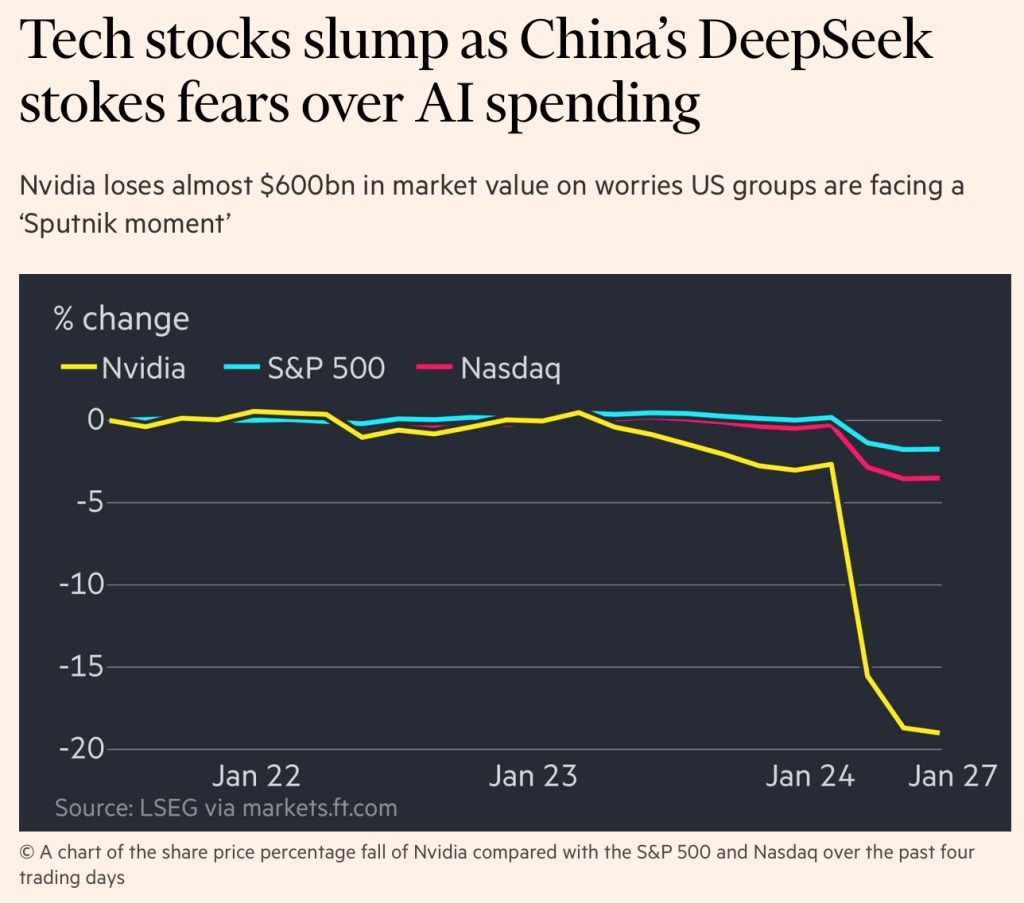
And as if to help this uncle promote this post to all my viewers, just yesterday, news of a Chinese startup, DeepSeek’s AI chatbot performing better than other US-developed ones like ChatGPT, and was trained using less advanced chips, and hence at much lower costs, sent shockwaves in the US tech sector. Nvidia’s shares tumbled 17% with market cap plunging nearly US$600 billion, longside other mega caps like Broadcom and Microsoft. The heavy concentration in such shares resulted in the Nasdaq 100 plunging more than 3%.
That’s why I’ve decided to make an initial shift of $10,000 from my S&P 500 ETF into an equal-weight ETF. With billions of dollars flowing into these funds recently, I believe there are good reasons to diversify away from big tech and reduce my reliance on just a handful of companies.
In this post, I’ll share why equal-weight ETFs are suddenly gaining attention, why I’m adding one to my portfolio, and whether they could be an appropriate option for you too. Stick around to find out if this strategy aligns with your goals!
But before we get started, let me remind you that this post is for informational and educational purposes only. It is not financial advice or a recommendation to buy or sell any specific product. My investment decisions are based on my personal goals, and you should evaluate what’s suitable for your own circumstances with the help of a licensed financial adviser.
Alright, let’s dive in and take a closer look at equal-weight ETFs.
Why Are Equal-weight ETFs Gaining Attention?
Equal-weight ETFs are having a moment. In 2024 alone, investors poured a record $17 billion into these funds. Why? Concern is growing over the dominance of big tech, which drove half of the S&P 500’s 27% return last year. Equal-weight ETFs, like the Invesco S&P 500 Equal Weight ETF or R.S.P., balance the playing field by giving each stock an equal share of the fund. This means the ‘Magnificent Seven’ such as Microsoft, Nvidia, Tesla, and the like, have far less influence, with their weightage reduced to just 1.5% from about 33%.
Additionally, these funds rebalance quarterly, selling high-performing stocks and buying laggards, creating a natural “buy low, sell high” effect. It’s a simple, structured way to diversify and reduce concentration risk, which is why so many investors, including me, are paying attention.
Performance: The Ups and Downs of Equal-Weight ETFs
Equal-weight ETFs like the Invesco S&P 500 Equal Weight ETF, or R.S.P., have been around for a while, but they’ve recently seen record inflows. That’s despite the fact that these funds underperformed the traditional S&P 500 in recent years.
For example, in the past year, the equal-weighted S&P 500 ETF returned 15.9%, significantly underperforming the market-weighted version’s 27.5%. That’s because the latter’s gains were heavily driven by big tech stocks.
However, the story changes in downturns. Take 2022, for instance: the S&P 500 fell 23%, but the equal-weight ETF declined less at 17%, showing its potential for stability. With the market-weighted S&P 500 trading at a high PE ratio of 27, compared to the equal-weight ETF’s more reasonable 19, the latter offers a more balanced risk-reward profile for those worried about volatility ahead.
This year’s surge of interest in equal-weight ETFs suggests that investors are looking beyond short-term performance. They’re prioritizing diversification and are drawn to the idea of reducing reliance on a few big names.
The Dividend Uncle’s Take: Why I’m Adding Equal-Weight ETFs for My Portfolio
Now, if you’ve been following my channel, you’ll know that my Growth portfolio has done exceptionally well this past year. It’s grown so much that it’s now the largest part of my overall portfolio, thanks to the stellar performance of U.S. tech stocks. But here’s the thing—this kind of growth can also create risks, with my portfolio becoming unintentionally concentrated in just a few sectors.
That’s why I’ve decided to shift $10,000 from my S&P 500 ETF into an equal-weight ETF. For me, it’s about balance. The Invesco RSP ETF spreads its investments evenly across all 500 companies in the index. Its quarterly rebalancing mechanism, a structured “buy low, sell high” strategy, is also very appealing for this dividend uncle who values disciplined investing.
While RSP is my choice, there are other options out there. I’ll share others with you in future posts, do look out for them.
Before we move on, if you’re finding this post helpful, please give it a “like” and consider subscribing to the channel for more insights like this. It really helps support the channel and ensures you don’t miss out on future content.
Should You Consider Equal-Weight ETFs?
So, you might be thinking whether equal-weight ETFs are right for you? It really depends on your investment goals and risk tolerance. If you’re worried about overexposure to big tech or want broader diversification, these funds could be worth considering. However, if you’re chasing high growth or are comfortable with the dominance of big tech in your portfolio, a market-cap-weighted fund might still make more sense. At the end of the day, there’s no one-size-fits-all approach, it’s about finding what aligns with your strategy.
There are other similar funds you may wish to explore, so compare options based on your own financial goals and risk tolerance. For example, if you are looking to diversify even further, the Invesco Russell 1000 Equal Weight ETF, or EQAL ETF could be one option. Unlike the R.S.P. ETF, which focuses solely on the S&P 500, EQAL takes it a step further by including 1,000 companies across a broader range of sectors. This makes it a great option for investors who want to reduce concentration risk even more and gain exposure to a wider range of mid-cap and smaller-cap stocks. While I haven’t moved into EQAL yet, it’s definitely on my radar for future shifts.
That’s all for today, folks. This $10,000 shift is just the start of my exploration into equal-weight ETFs. For me, it’s about reducing concentration risks, diversifying my portfolio, and capturing opportunities beyond big tech.
Equal-weight ETFs aren’t perfect, they won’t always outperform, but they offer a structured way to balance your portfolio, especially in top-heavy markets. If you’re curious about them, do your research, and see if they align with your goals and risk appetite.
What about you? Are you sticking with market-weighted funds, or are you exploring equal-weight options? Let me know in the comments below. And if you found this post helpful, don’t forget to like, share, and subscribe for more investing insights. Until next time, happy investing!


Leave a comment